how to look at art
Here are some thoughts on how to look at my art and art in general. (This is a developing page)
*Disclaimer* - Anything I say I may, or may not believe in after the moment I say it.
Before looking at art, the viewer should try and clear their minds of distractions. Suspend all judgements and stay aware of your emotional and mental state. Enjoyment of art is not to result in joy or even a conclusion. The viewer must be willing to be affected by the image they are viewing. Observing and living with art is a developing relationship between the viewer and a "living object." At its basis, art is a means of escape from the natural world to a reflection of life as expressed by the artist. Art can be a means to understand how humans perceive life, whether it’s the individual or a collective vision channelled through the artist's hand.
What is art?
Art is the corporeal representation of the deeply unsettling knot of humanity, which the artist tries to untie.
Art is the expression of human culture as understood by the artist.
Art is a viewpoint which a person feels is worth seeing more than once.
Definition of Fine Art:
Fine relates to the fine or complex sensibilities of emotions: deep states of consciousness, elations of spiritual, philosophical or religious states of being, or intense emotional reactions to your environment; life finely explored.
Art does not relate to the object, but to the artistry displayed in capturing the state of being communicated. The ideal is to match the artistry to the fine intent so the consequence is that the viewer experiences the same state of being, or deep understanding of the subject, as the artist did when making the work.
About Adam's Work:
Adam's artwork explores the zozobra in a suture zone, through the medium of digital painting and photomontage. Collage is a means to express the workings of the unconscious mind or as a political or social act of protest. Collage makes clear the disparate parts of images used, that when coupled together, a new reality previously unknown arises. Montage is the painting, suturing and layering of multiple parts to create a single unified image, thereby emphasizing the final image’s “reality” rather than the procedures and materials of its creation. Photo D'mage (damage/mage) refers to the damage done to photos and their content in the process of art making; also a magician or learned person wielding their artistry to create something from nothing which appears magical. Photos from a variety of sources, including the artists, bring realism, clarity, and relevance to contemporary themes of corruption, war crimes, disease, and greed. Images appear as "real" as the photographic material they are based on, but now embody a reality of their own. By turns, demanding, fearful, and disorienting. They are apt representations of the times we live in.
Artists re-contextualize their cultural experience into new forms and realities. Even though the artistic methods may be historically similar, the meaning and content are relevant to the times in which they live. For Adam, light and shadow become the primary language of communication. Light struggles to define unknown spaces while shadows sit lugubriously in the atmosphere. Dense light illuminates the journeys we take from the purely aesthetic to the sacramental to the political, then reconstruct into stark forms and landscapes, resulting in nuanced, disturbing and sensual images. Shadows visually define the composition, form and space, but unknowingly, it may not be the light we see - only the shadows have substance. Adam's images reflect our anxious world showing the “essentia” - the world as it really is.
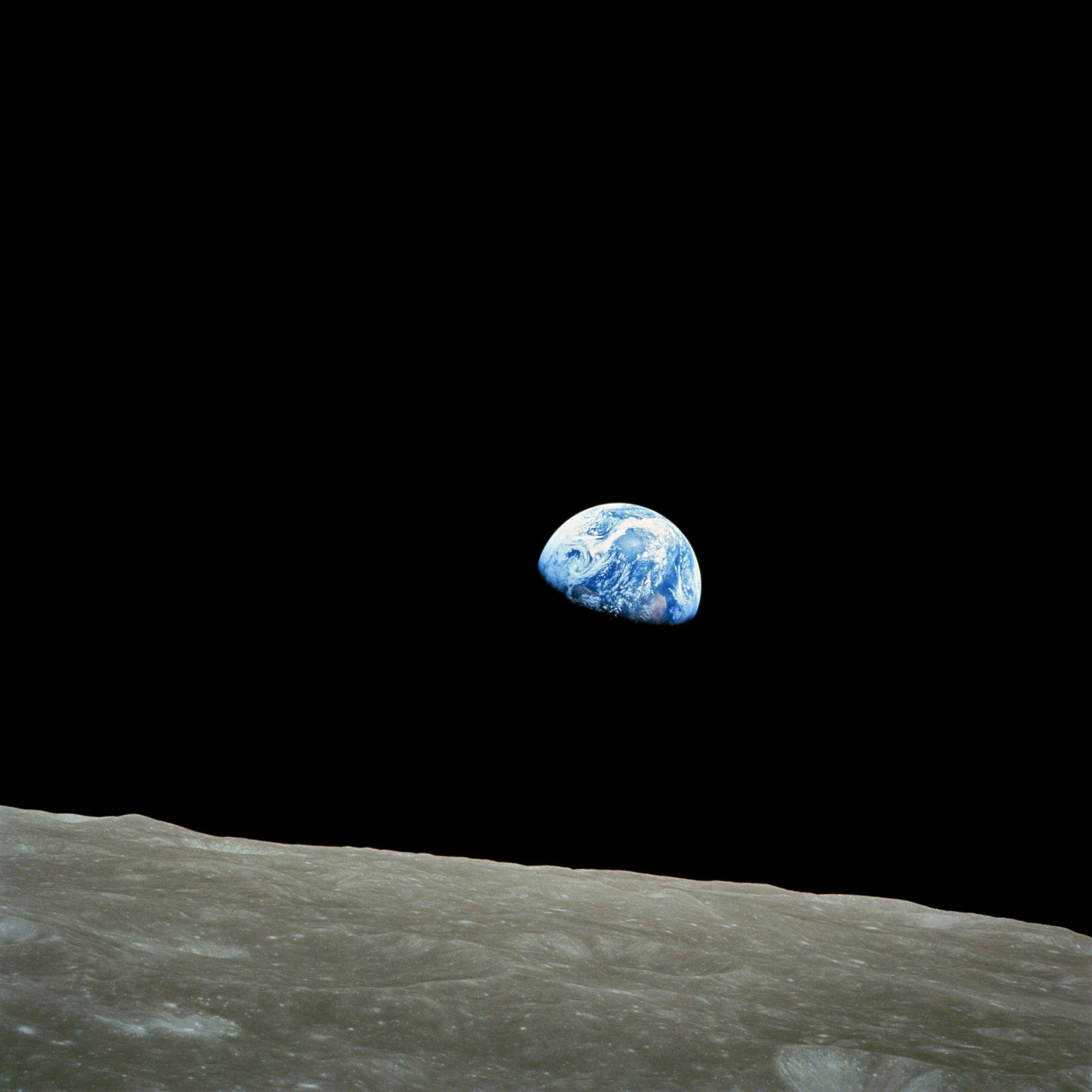
Each view of art provides a view-within-a-view of reality, a window to look through. New realities change how we interact with the world around us. Images such as the view of the earth seen from the moon (below) has changed how humans see ourselves in relation to the earth and all things. The effect of this "televiewing" happens unconsciously. Changes in scale changes the scale of our consciousness; what we are conscious of in our daily lives, which in turn changes how we behave or what we believe in.
Some basic assumptions and possible truths...
#1. An image does not make it a work of art. Art is an expression of an idea, concept, or vision, based on the artist's perception of life which is manifested by a process of creation, resulting in something existing that could not have existed before.
#2. Visual art is its own language. Like speaking we have words in our vocabulary that we use in combination with other words to communicate. The personal dictionary we have allows us to describe and identify our reality. The limits of language limits expression and our perception of reality. Concepts cannot be understood without knowing the meaning of the words. Visual art has a tactile language which includes creating objects: drawings, paintings, printing through a variety of methods. Language is further used and expanded to include the content of those objects: light and shadow, line, shape, form, colour, composition, and design shapes a visual message that can communicate without words. The visual language can also include a vast array of visual cultural images, symbols and signs, people are exposed to throughout their lifetime.
#3. The components of art:
- The object
- The context
- The aesthetic
- The content
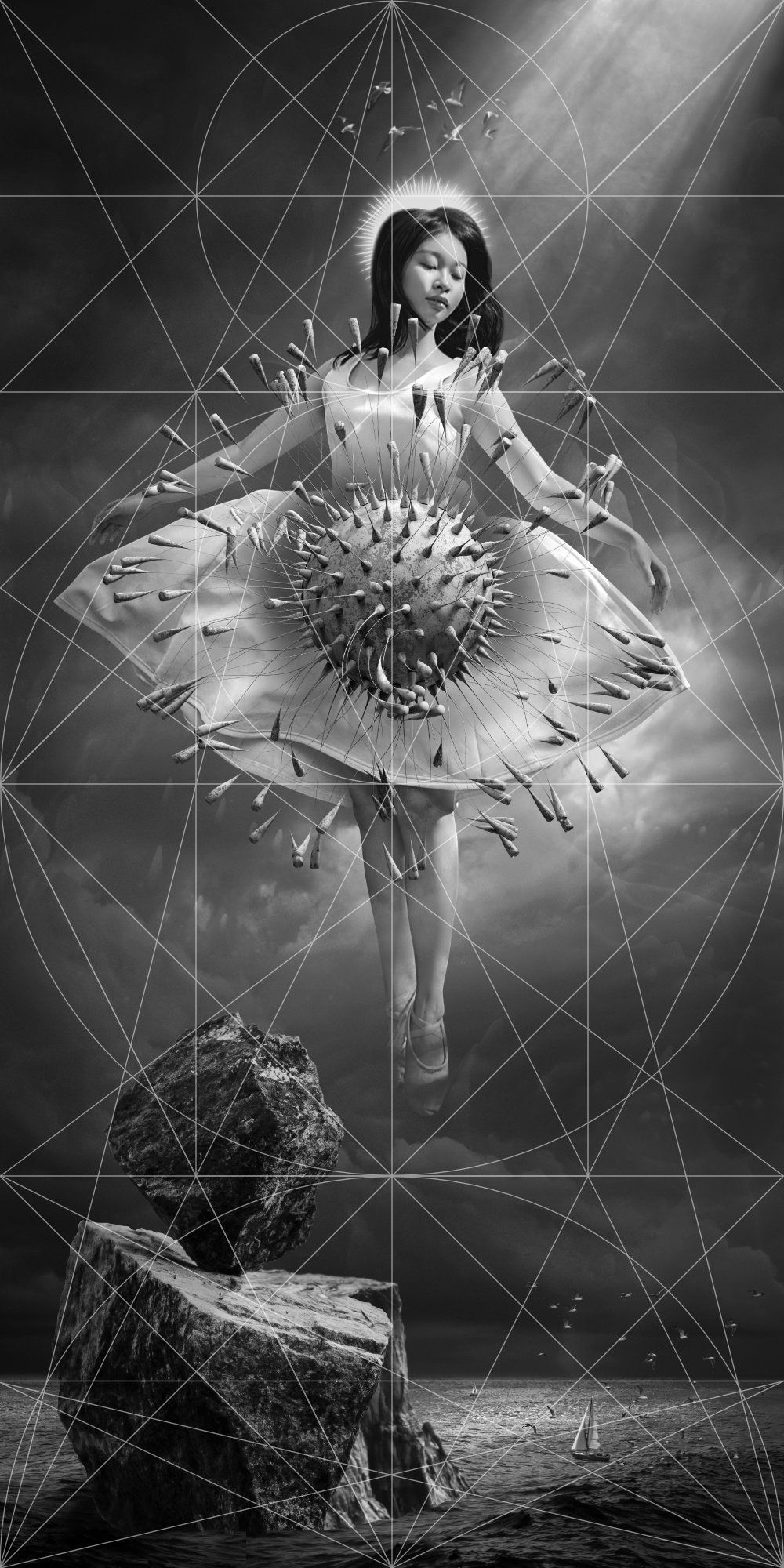
Compositional Geometry
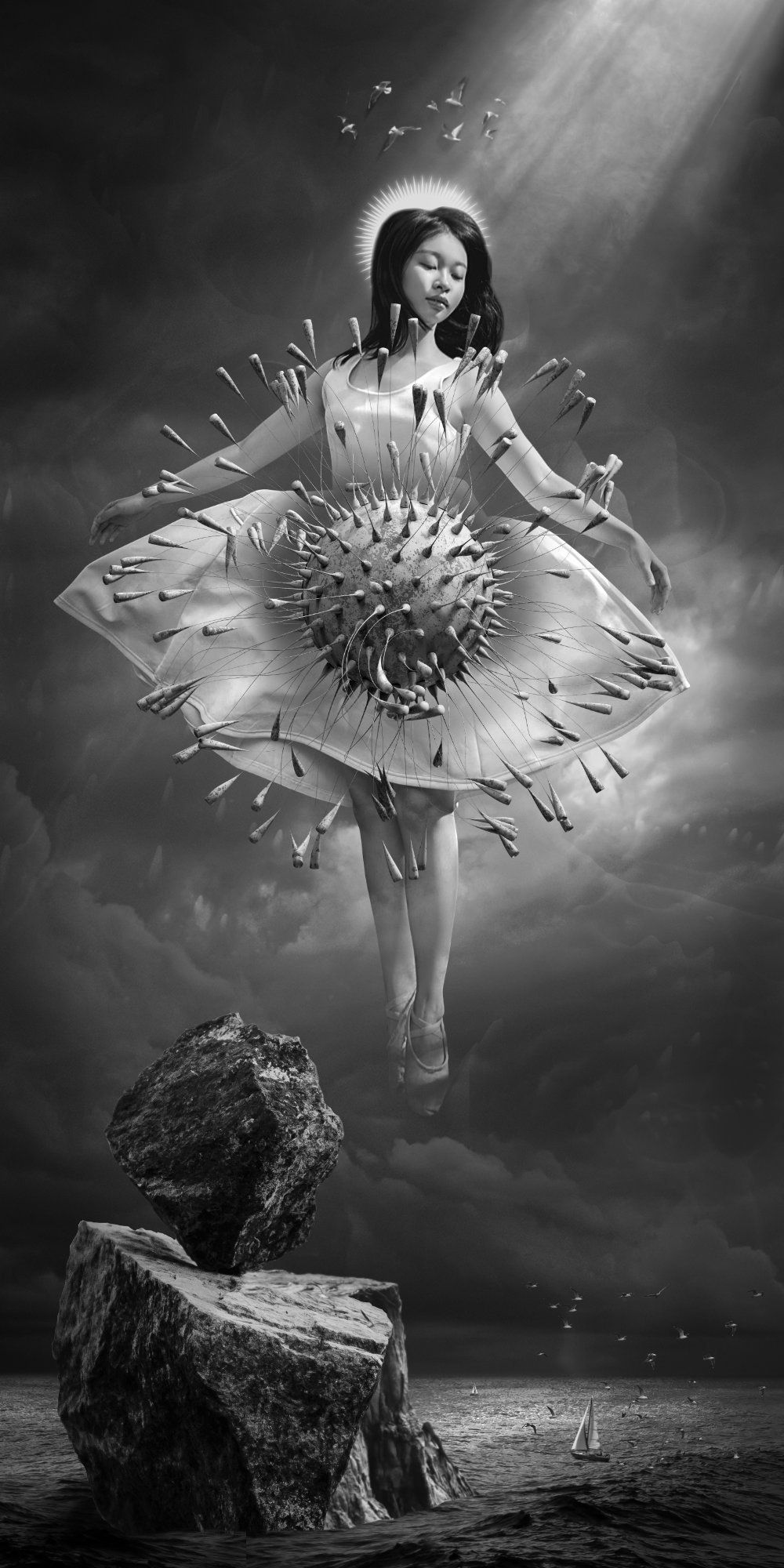
It may be of interest to some how my images are constructed. The examples here demonstrates how the geometrical composition "informs" the placement and size of elements and emboldens the design of the image.
My father went to the Art Students' League in the 50's and acquired the book, The Art Spirit. I read it in the 80's at the Ontario College of Art. Even today, Robert Henri's words on art inspire an ideal of the artist and their purpose to me.
Robert Henri Quotes from his book "The Art Spirit" -
The reproduction of things is but the idle industry of one who does not value their sensations, and who was done with their imaginings when they passed out of childhood and consented that the prancing horse they had bestrode in those happy days had only been a broken broomstick.
All manifestations of art are but landmarks in the progress of the human spirit toward a thing but as yet sensed and far from being possessed.
Art is the inevitable consequence of growth and is the manifestation of the principals of its origin.
Art after all is but an extension of language to the expression of sensations too subtle for words.
There are mighty few people who think what they think they think.
In these times there is a powerful demarcation between the surface and the deep currents of human development.
Events and upheavals, which seem more profound than they really are, are happening on the surface.
But there is another and deeper change in progress. It is of long, persistent growth, very little affected and not at all disturbed by surface conditions.
The artist of today should be alive to this deeper evolution on which all growth depends, has depended and will depend.
On the surface there is the battle of institutions, the illustration of events, the strife between peoples. On the surface there is propaganda and there is the effort to force opinions.
The deeper current carries no propaganda. The shock of the surface upheaval does not deflect it from its course.
It is in search of fundamental principal; that basic principal of all, which in degree as it is apprehended points the way to beauty and order, and to the law of nature.
On the surface, disaster is battled with disaster. Things change. But all improvement is due to what of fundamental law rises to the surface, through the search made by those of the undercurrent.
I am not interested in art as a means of making a living, but I am interested in art as a means of living a life. It is the most important of all studies, and all studies are tributary to it.
The object of painting a picture is not to make a picture- however unreasonable this may sound. The picture, if a picture results, is a by-product and may be useful, valuable, interesting as a sign what has passed. The object, which is back of every true work of art, is the attainment of a state of being, a state of high functioning, a more than ordinary moment of existence.
To have ideas one must have imagination.
To express ideas one must have science.
Low art is just telling things; as, There is the night. High art gives you the feel of the night. The latter is nearer reality although the former is a copy. The artist should be interested not in the incident but in the essence of his subject.
The coming into the presence of a piece of art you truly love causes a tremendous revolution to occur in you.
A work of art is the trace of a magnificent struggle.
True art strikes deeper than the surface. There is that which we call the subconscious. We do certain things and are influenced by certain things without knowing why.
Photo D'mage- definition
Photo: reality captured/copied
D'mage: 1. Damage / 2. Mage
- Damage: the damage done to photos, their content and meaning in the process of art making.
- Mage: A magician wielding artistry to show viewers an illusion. Creating something out of nothing.